
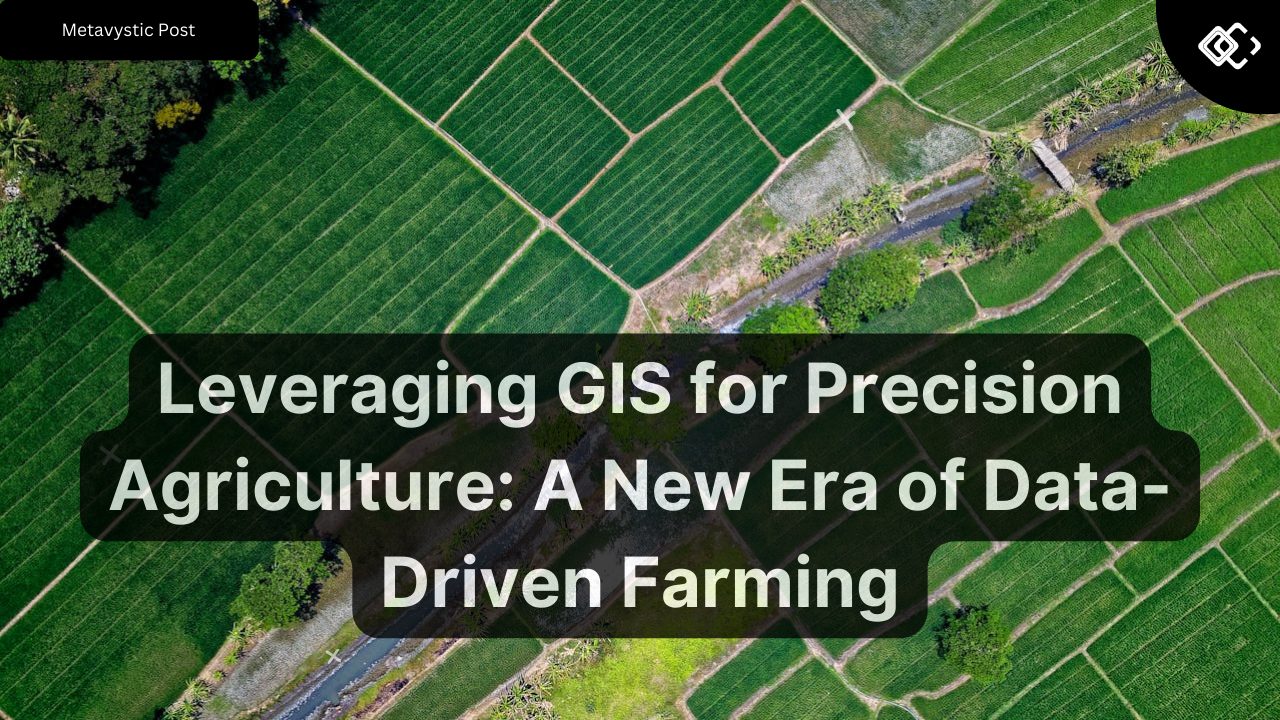
Agriculture has always been the backbone of global economies, but with growing populations, changing climates, and shrinking resources, modern farming faces new challenges. Enter precision agriculture—a farming management approach that leverages technology to optimize field-level management and make smarter, data-driven decisions. At the heart of precision agriculture lies Geographic Information Systems (GIS), a powerful tool that is reshaping how farmers approach crop management, resource allocation, and sustainability.
What is Precision Agriculture?
Precision agriculture is a farming method that uses technology to collect and analyze data on soil conditions, weather patterns, crop health, and other variables that affect farming outcomes. By utilizing real-time data, farmers can make informed decisions that improve yield, reduce waste, and conserve resources.
GIS plays a pivotal role in precision agriculture by capturing, storing, and visualizing spatial data in ways that allow farmers to understand and manage their land more effectively. From mapping soil variability to tracking crop growth patterns, GIS brings a new level of accuracy to agricultural decision-making.
1. Optimizing Crop Yields with Spatial Data
One of the biggest challenges in agriculture is understanding the variability of soil and crop conditions across large plots of land. GIS enables farmers to create detailed maps that highlight soil types, nutrient levels, and moisture content. By analyzing this spatial data, farmers can optimize their planting strategies, ensuring that each section of land receives the right amount of seeds, water, and fertilizers based on its specific characteristics.
For example, areas with nutrient-rich soil may require less fertilizer, while regions with poor soil quality might need additional inputs to achieve optimal yields. This targeted approach not only increases productivity but also reduces costs by minimizing waste.
2. Improved Resource Management
Water is one of the most critical resources in agriculture, and managing its use efficiently is essential for both crop health and environmental sustainability. GIS allows farmers to monitor water usage through real-time data on soil moisture, rainfall, and irrigation patterns. By identifying areas that require more or less water, farmers can adjust their irrigation schedules, reducing water waste and preventing overwatering, which can lead to soil degradation and crop damage.
GIS also helps in tracking the movement of pesticides and fertilizers, ensuring that chemicals are applied only where they are needed, further minimizing environmental impact.
3. Disease and Pest Management
GIS is invaluable for monitoring the spread of diseases and pests across agricultural lands. By using spatial data to track outbreaks and patterns of infestation, farmers can quickly identify areas at risk and take preventive measures. This proactive approach minimizes crop losses and reduces the need for widespread pesticide application, which is not only cost-effective but also better for the environment.
In addition, GIS integrates data from weather stations, helping farmers anticipate conditions that could lead to pest outbreaks or disease spread, allowing for timely interventions.
4. Sustainability Through Data-Driven Decisions
Sustainability is at the forefront of modern agriculture, as farmers seek ways to meet growing food demands while minimizing environmental harm. GIS helps farmers adopt more sustainable practices by providing insights into land use, crop rotation, and soil health. By analyzing long-term data, farmers can make decisions that promote soil regeneration, reduce chemical usage, and enhance biodiversity.
For instance, GIS can help farmers plan crop rotations that maintain soil fertility, prevent erosion, and reduce the reliance on synthetic inputs. It also supports conservation efforts by identifying ecologically sensitive areas where farming activities should be minimized to protect natural habitats.
5. Precision Livestock Farming
GIS isn’t just limited to crop farming—it’s also transforming livestock management. With GIS, farmers can track the movement and health of livestock across large pastures, monitor grazing patterns, and identify areas that may be overgrazed. This allows for better land management, ensuring that livestock are evenly distributed across the available land and that the soil and vegetation remain healthy.
Additionally, GIS can be used to analyze data from wearable sensors on animals, helping farmers detect early signs of illness, stress, or nutritional deficiencies, leading to better animal welfare and productivity.
6. Predictive Analytics for Future Farming
One of the most exciting aspects of GIS in precision agriculture is its ability to integrate predictive analytics. By analyzing historical data and trends, GIS can help farmers forecast crop yields, anticipate resource needs, and make decisions that maximize productivity while reducing risks. For example, by analyzing past weather patterns, GIS can help farmers predict drought conditions or identify the best planting times for certain crops.
These predictive capabilities allow farmers to stay ahead of challenges and plan more effectively for the future, ensuring long-term success in an ever-changing environment.
Conclusion
GIS is revolutionizing the agricultural industry by providing farmers with the tools they need to make smarter, data-driven decisions. From optimizing crop yields and managing resources more efficiently to promoting sustainable practices, GIS offers a new level of precision that is helping farmers navigate the challenges of modern agriculture.
As the world continues to demand more food from fewer resources, precision agriculture powered by GIS will play an increasingly vital role in ensuring that farming remains productive, efficient, and environmentally responsible.
At Metavystic, we specialize in providing cutting-edge GIS solutions for the agricultural sector. Let us help you harness the power of geospatial technology to transform your farming operations and achieve greater success.